Building Resilient Revenue Structures via Submissions and Advertisements Across Beauty, Apparel, and Device Recommendation Platforms
Written by Theo Hoffmann · Nov 5, 2026
Building Resilient Revenue Structures via Submissions and Advertisements Across Beauty, Apparel, and Device Recommendation Platforms
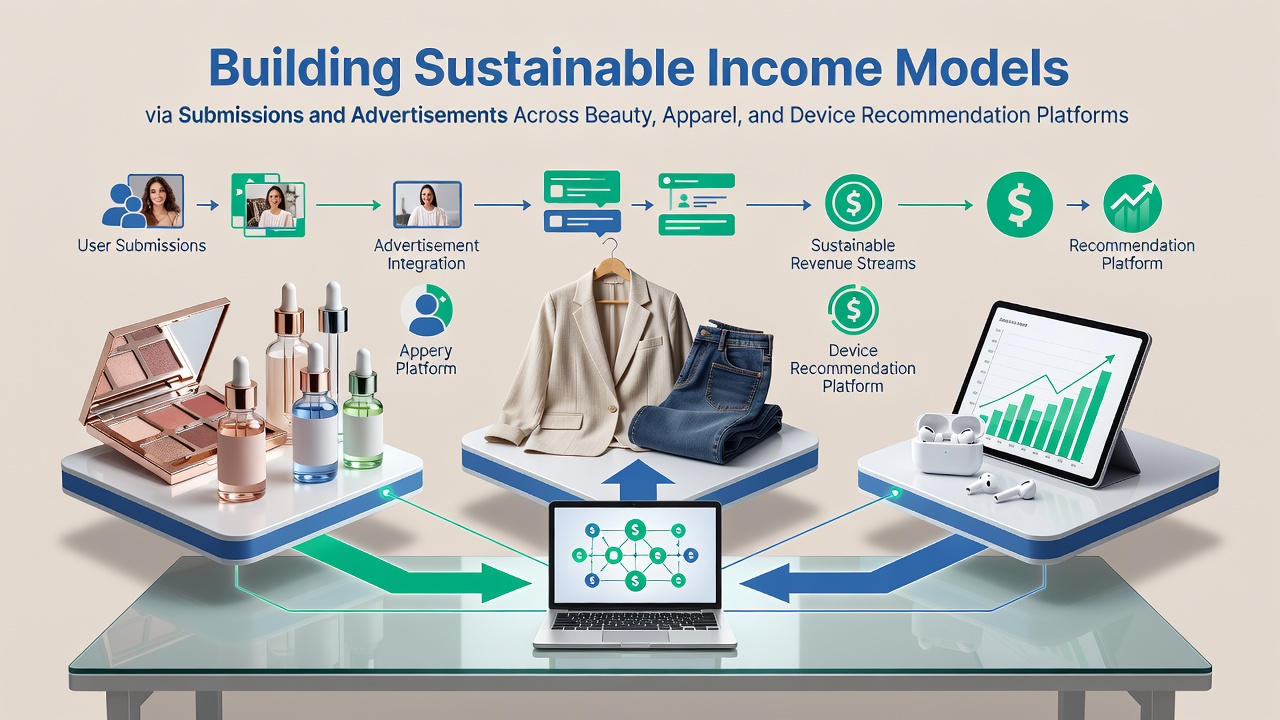
Recommendation platforms focused on beauty products, apparel selections, and device options have expanded their operations by combining user-generated submissions with targeted advertising placements, and observers note that these dual approaches create layered income streams when managed according to established guidelines. Data from industry reports indicate that platforms handling thousands of monthly submissions often allocate portions of their ad inventory to maintain consistent revenue while encouraging fresh content contributions from external participants. Research conducted by academic institutions shows that categories such as skincare formulations, seasonal clothing lines, and portable electronics demonstrate distinct patterns in how submissions feed into ad-supported sections, with each vertical requiring tailored compliance checks before publication.
Submission Frameworks and Their Contribution to Platform Stability
Submission systems on these platforms typically require contributors to supply product details, pricing information, and performance metrics that align with editorial standards, and figures from regulatory bodies reveal that verified submissions increase user engagement rates by measurable margins. Those who operate beauty-focused sections frequently receive entries covering ingredient sourcing and application results, whereas apparel submissions emphasize sizing consistency and material durability, while device recommendations focus on compatibility specifications and energy efficiency ratings. According to records maintained by the Australian Competition and Consumer Commission, clear disclosure protocols applied during the submission review process reduce the incidence of misleading claims across all three categories. Platforms integrate these submissions into searchable directories that subsequently host advertisement placements, creating a pipeline where content volume directly influences available ad space without requiring additional production overhead from site operators.
Advertising Placement Techniques Across Categories
Advertisements appear in dedicated sidebars, inline within list formats, and as sponsored highlights that accompany user submissions, and evidence from multiple platform analyses demonstrates that contextual matching between submitted content and ad creatives improves click-through metrics. In beauty sections, banner placements often feature complementary skincare routines positioned near product comparisons, while apparel pages display seasonal promotions adjacent to style guides derived from submitted entries. Device recommendation areas utilize specification comparison tables that incorporate sponsored listings for accessories, and studies from research institutions indicate that such integration maintains separation between organic submissions and paid promotions when visual cues remain consistent. Observers tracking activity through November 2026 have recorded steady growth in ad impressions across these verticals, particularly where platforms update submission guidelines to reflect new labeling requirements issued by oversight agencies.

Cross-Category Patterns and Regulatory Alignment
Beauty, apparel, and device platforms share common infrastructure for handling submissions and advertisements, yet each category applies distinct verification steps that account for product-specific risks such as skin sensitivity claims, fabric composition accuracy, and battery safety standards. The U.S. Federal Trade Commission maintains endorsement guidance documents that platforms reference when reviewing submissions containing influencer statements, and similar principles appear in guidance from other jurisdictions. Those managing multi-category sites report that centralized content management systems streamline the insertion of advertisements next to approved submissions, reducing administrative time while preserving category-specific rules. Data collected through industry monitoring services shows that platforms enforcing uniform disclosure requirements across beauty, apparel, and device listings experience fewer compliance interventions from oversight bodies.
Revenue Diversification Through Combined Models
Income generated from submissions often stems from premium listing fees or featured placement charges paid by product suppliers, whereas advertisement revenue derives from impression-based or performance-based contracts with external advertisers. Researchers at various universities have documented that sites balancing both streams achieve more stable monthly returns compared with single-source models, especially when submission volume fluctuates seasonally. Apparel platforms, for instance, see increased submissions ahead of major retail cycles that coincide with heightened advertising demand from brands, and device categories follow product launch calendars that similarly align submission peaks with ad opportunities. Beauty sections maintain steadier submission flows year-round, supported by continuous product releases that allow ongoing ad rotations without seasonal gaps.
Operational Considerations for Long-Term Viability
Platform operators allocate resources to moderation teams that evaluate submissions for accuracy and compliance before advertisements are assigned to surrounding content, and records indicate that investment in automated screening tools has reduced review times across multiple sites. Geographic variations in consumer protection rules require platforms serving international audiences to apply region-specific filters during the submission approval stage, and data from cross-border analyses confirm that such measures support sustained advertising partnerships. Those overseeing device recommendation sections additionally track technical specification updates that affect both submission validity and ad relevance, ensuring that promotional materials remain aligned with current product offerings.
Conclusion
Recommendation platforms in beauty, apparel, and device categories sustain operations by coordinating submission intake with advertisement deployment under established regulatory frameworks, and available records through November 2026 illustrate measurable outcomes from this integrated approach. Continued alignment with disclosure requirements and category-specific standards enables platforms to maintain submission volume while securing advertising commitments from diverse sources.